



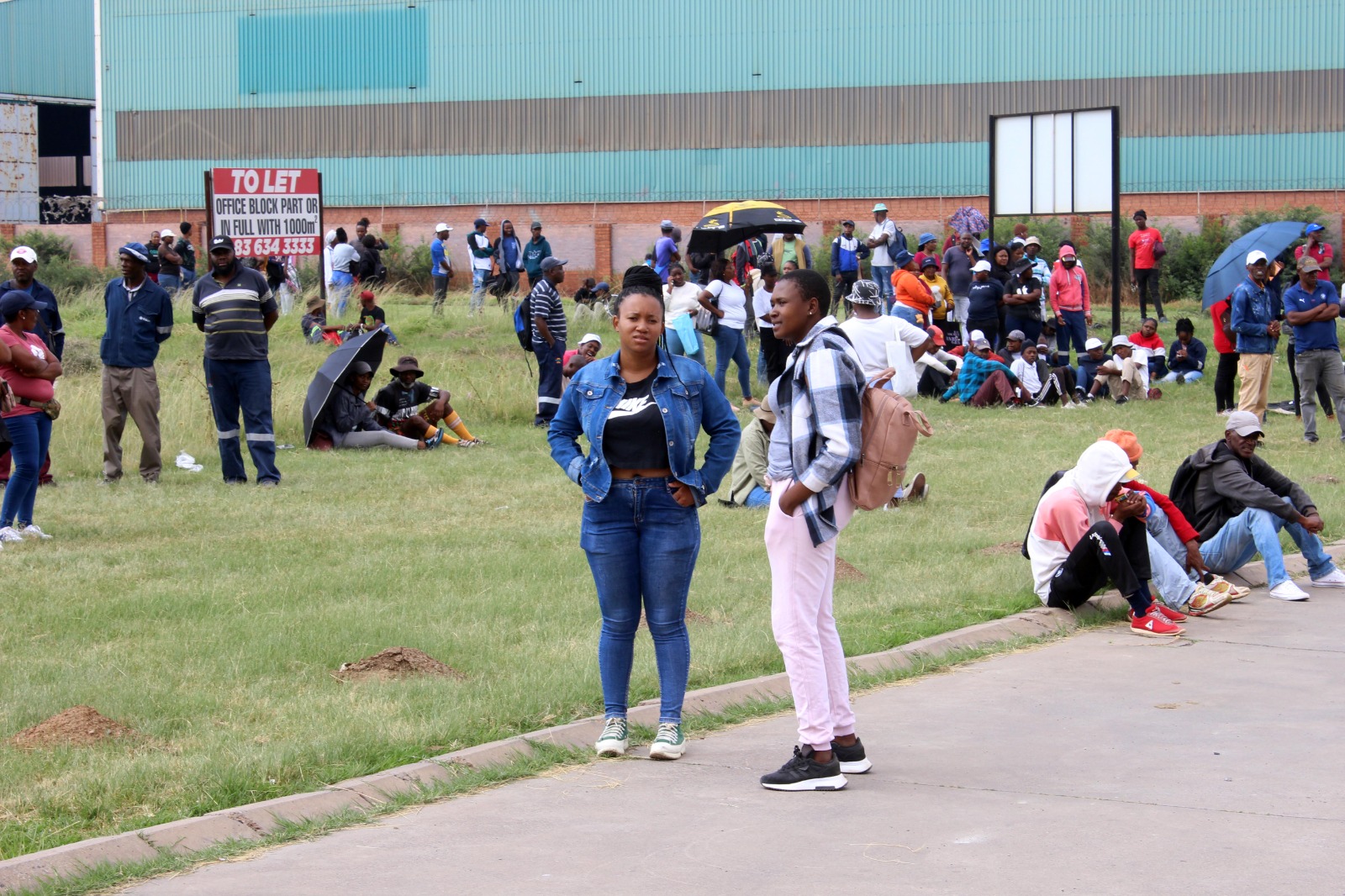
South Africa’s unemployment rate has jumped to 33.6%, with 345,000 more people now unemployed — while youth unemployment rockets to 47.4%.
South Africa’s unemployment crisis has deepened, with the official unemployment rate jumping to 33.6% in the second quarter of 2026.
According to the latest Quarterly Labour Force Survey (QLFS) released by Statistics South Africa (Stats SA), the number of unemployed people increased by a staggering 345,000 to 8.5 million between the first and second quarters.
At the same time, the number of employed people fell by 16,000 to 16.7 million.
This pushed the country’s labour force up by 329,000, or 1.3%, during the three-month period.
The official unemployment rate rose by 0.9 percentage points, from 32.7% in Q1 to 33.6% in Q2.
Stats SA’s Director of Quarterly Employment Statistics, Matlapane Masupye, said the latest figures reflected changes across different parts of the labour market.
The figures also show that the number of discouraged work-seekers dropped by 227,000 to 3.7 million.
Other available job-seekers fell by 49,000 to 861,000, while unavailable job-seekers declined by 4,000 to 44,000.
Together, these changes resulted in a 280,000 decrease in the potential labour force, bringing it down to 4.6 million.
The number of people outside the labour force for other reasons, however, increased by 72,000 to 12.5 million.
Overall, the number of people outside the labour force decreased by 208,000 to 17.1 million.
Young South Africans continued to bear the brunt of the jobs crisis.
The number of unemployed people aged between 15 and 34 increased by 264,000 to 5 million during the second quarter.
Meanwhile, youth employment dropped by 40,000 to 5.6 million.
As a result, the youth unemployment rate climbed by 1.5 percentage points to 47.4%.
That means almost half of young people in the labour force were unemployed during the period.
The employment picture was mixed across industries.
Trade recorded the biggest increase, adding 70,000 jobs, followed by construction with 39,000 and finance with 11,000.
But the gains were wiped out by major job losses in several sectors.
Community and social services shed 57,000 jobs, while mining lost 26,000.
Agriculture and manufacturing each recorded a decline of 15,000 jobs.
Employment in the formal sector fell by 41,000, while the household sector lost 9,000 jobs.
The informal sector, meanwhile, recorded an increase of 34,000 jobs.
Gauteng was among the provinces to record a decline in employment.
The province lost 22,000 jobs during the second quarter.
The Western Cape recorded the largest decline at 48,000, followed by Gauteng and North West, which lost 15,000 jobs.
On the other hand, Mpumalanga recorded the biggest increase, gaining 41,000 jobs, followed by the Eastern Cape with 13,000 and the Free State with 9,000.
The broader measure of labour underutilisation also remained high.
The combined rate of unemployment and time-related underemployment increased to 36.6%, while unemployment combined with the potential labour force rose to 43.8%.
The composite labour underutilisation rate remained unchanged at 46.3%.
